
Welcome to the basementshaman.com. A website where you can ready in-depth articles about different herbs and mushrooms that have, or is claimed to, medical properties. The Shaman always looks at both the scientifically proven and the unproven.
The website feature information on both legal and illegal herbs and fungi. An example of this is that we write about cannabis sativa and ephedra that remain illegal substances in many jurisdictions.
- The Shaman does not take a legal or ethical stance on the consumption of controlled herbs and fungi.
- The shaman does not condone it, but he does not condemn it either.
- He only looks at the medical effects of the plants and fungi without further considerations.
The Shaman does not provide information on how to grow controlled herbs and fungi and will not help you find where to buy them.
Natural medicine
Native populations the world over have used different plants, herbs, and fungi to treat various disease and afflictions. Some of these remedies have been little more than scams performed by hustlers who prayed on the sick. Some of these scam remedies were spread by well-meaning medicine men who thought the scams were real — other natural remedies where very effective against the diseases they were designed to fight and could rival the effectiveness of our modern medicines.
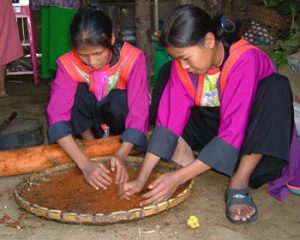 Or in other words: The world wasn’t too different back then. There were medical scams designed to trick people and well-meaning healers who just want to help. Just like now.
Many of the remedies that was used by native populations were closely guarded secrets that were passed down from shaman to shaman. Only a small part was common knowledge or written down. This, unfortunately, means that we have lost a lot of the knowledge about medical plants, herbs, and fungi that once existed. The knowledge we have retained is only a small part of what we once knew. This is especially true in certain areas such as the Amazon where the biodiversity is very large and where de-foresting means that we lose potential medicines every day.
All this lost knowledge and potentially lost medicines motivated me to devote my free time to medical herbs and lost knowledge. This website is a part of that work. And attempt to spread the knowledge gathered.
Natural supplements VS modern medicine
It is vital that everyone understands that I am not against modern medicine. I do not believe we should use natural remedies instead. I think both types of medicine have an important role to play and that both types can complement each other. We should devote resources to study both types of medicines and use both as is appropriate. There are a lot of medical problems that can be treated with natural remedies but there is also a lot of diseases that are best treated with modern medicine.
The most important example of a disease that should be treated with modern medicine. Never bet your life on a natural remedy that hasn’t been scientifically proven to be effective against your disease. Always use modern medicine to maximize your chance of recovery. With this being said. There is nothing to prevent you from using natural remedies as well. Use them with modern medicine, not instead of. Always ask your doctor before starting taking a natural supplement if being treated for a disease. Some supplements can interact with the medicines and neutralize them or create dangerous side effects.
The problem with scams
Scammers are attracted to all areas of society where there is a lot of money to be found. This is true for:
- Gambling, where people try to cheat the casino and other players to win money
- Cars, where unscrupulous dealers try to sell you junk cars at inflated prices.
- Financial services, where fraudulent brokers try to trick people away from reputable platforms and towards their own rigged brokerage systems.
- Cancer and other deadly diseases, where scammers relies on peoples desperation to scam money from them.
This is also true for the natural remedy industry.
The natural remedy industry has a big problem with scams. There are a lot of individuals that are active in this field that sell products that have no proven effect but they still promise that it will be good against everything from bunions to cancer. These individuals hurt our field and make it hard for real scientists to do research on natural remedies. It is not a serious field. It is up to all of us to try to clean up the field and point out scams where ever we see them. It is time to turn natural medicine into a true science, not a faith.
The industry also has a problem with charlatans that claim that certain herbs have magical properties. Many of these charlatans offer expensive potions that are supposed to bring luck or love. All of these potions are 100% useless and have no magical properties.
The only way to get more luck in your life, to find love or to become wealthy is to work hard at it. Learn which games you can beat and train to become as skilled as possible when you play those games. Put yourself out there and make a grand gesture to find love. Work hard to become wealthy, and so on.